
U.S.
Mojtaba Khamenei Takes Over as Iran’s Supreme Leader
Mar
FirstAm News | Raleigh, NC
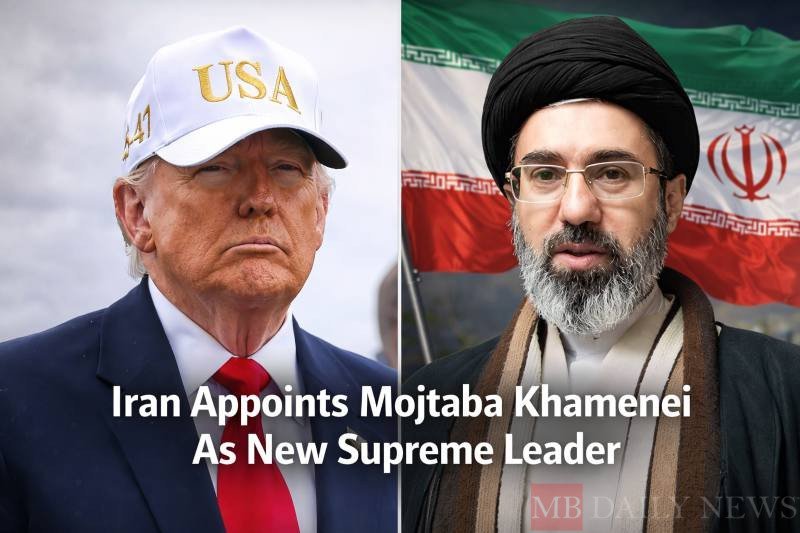
Mojtaba Khamenei has officially been appointed as Iran’s Supreme Leader, a pivotal development in the country’s political landscape. His new role comes with extensive political and religious authority, marking a significant transition for the Islamic Republic. As the son of the late Ayatollah Ali Khamenei, he steps into a position that has profound implications for both domestic governance and international relations. Observers are closely monitoring how his leadership will influence Iran’s future direction. The appointment raises questions about the continuity of existing policies and potential shifts in governance. Analysts are particularly interested in how this change will affect regional stability.
Significance of the Leadership Change
The appointment of Mojtaba Khamenei as Iran’s Supreme Leader carries substantial weight in the nation’s political framework. He now oversees critical institutions, including the armed forces and judiciary, which centralizes power within the regime. This consolidation suggests that the current policies may persist under his leadership. Many analysts believe that his approach will mirror that of his father, potentially maintaining a hardline stance on various issues. The implications of this leadership change extend beyond Iran, influencing geopolitical dynamics in the Middle East. Observers are keen to see how his decisions will unfold in the coming months.
Political Authority and Governance
As the highest political authority, Mojtaba Khamenei’s leadership will significantly shape Iran’s governance. His influence will extend to legislative processes and executive actions, potentially altering the political environment. Establishing his priorities and agenda will be crucial as he navigates the complexities of Iranian politics. His connections within the Islamic Revolutionary Guard Corps may also play a role in shaping military strategies. The relationship he cultivates with elected officials will be vital in determining policy direction. Stakeholders are eager to see how he balances these dynamics.
Military Leadership Responsibilities
Mojtaba Khamenei’s role as the head of the armed forces introduces significant military responsibilities. His decisions will directly impact Iran’s defense strategies and military engagements. The potential for a more assertive military posture in the region raises concerns among neighboring countries. Analysts will closely evaluate his military strategies and their implications for regional security. The balance between military readiness and diplomatic engagement will be a critical focus. Observers are particularly interested in how he will manage these dual responsibilities.
Domestic Policy Implications
The new Supreme Leader’s domestic policies will be closely scrutinized as he sets his agenda. His leadership style may influence various sectors, including the economy and social issues. The public’s response to his governance will be a key factor in determining his success. Analysts predict that he may prioritize stability and continuity over radical reforms. The interplay between public sentiment and government policy will be crucial in shaping Iran’s future. Stakeholders are watching for signs of how he will address pressing domestic challenges.
International Relations Outlook
Mojtaba Khamenei’s appointment is likely to impact Iran’s approach to international relations. His leadership could signal a shift in how Iran engages with global partners and adversaries. Observers are particularly interested in his stance on ongoing negotiations regarding nuclear agreements. The potential for increased tensions with Western nations may arise as he establishes his foreign policy priorities. The international community will be monitoring his actions closely. How he navigates these relationships will be pivotal for Iran’s standing on the world stage.
Future of Iran’s Governance
The future of Iran’s governance under Mojtaba Khamenei remains uncertain, with many variables at play. His leadership will be tested as he addresses both internal and external challenges. The balance between maintaining the regime’s core values and adapting to changing circumstances will be critical. Analysts will continue to assess the implications of his decisions for Iran’s political landscape. The evolving dynamics within the country will also influence regional stability. Observers are keen to see how his tenure unfolds in the coming years.

