
U.S.
Military Blockade Imposed in Strait of Hormuz Amid Failed Talks
Apr
FirstAm News | Raleigh, NC
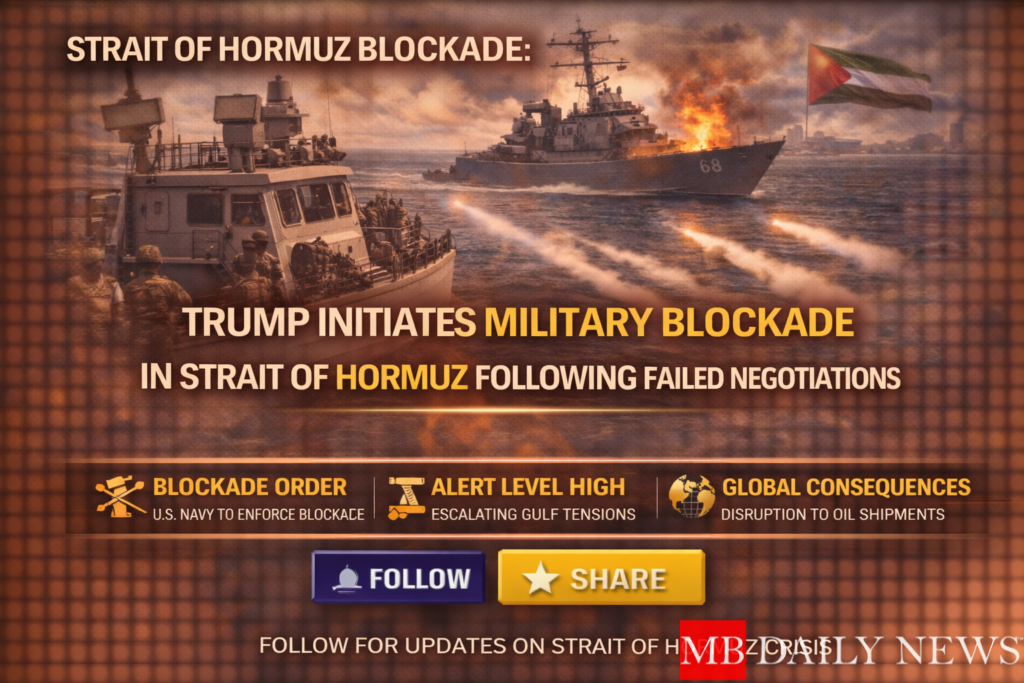
President Donald Trump has ordered a military blockade in the Strait of Hormuz after diplomatic negotiations with Iran fell through. This decision heightens tensions in a region that plays a crucial role in global oil and gas transportation. The announcement, made via social media, highlighted the U.S. Navy’s involvement in enforcing the blockade. Trump warned that any aggressive actions from Iran towards vessels would lead to serious repercussions. The blockade’s implications could significantly affect international shipping and energy markets. Observers are closely watching the situation for any signs of escalating military conflict.
Background of the Negotiations
Recent discussions between the United States and Iran aimed to resolve ongoing tensions and establish a ceasefire. These negotiations took place in Islamabad, Pakistan, but ultimately did not yield a successful agreement. The failure of these talks raises significant concerns regarding the future of diplomatic relations between the two nations. Trump indicated that the ceasefire depended on Iran’s willingness to allow free passage through the Strait of Hormuz. This waterway is vital for oil and gas transport, making the stakes particularly high. The breakdown of negotiations may lead to increased instability in the region.
Trump’s Military Directive
In his announcement, Trump directed the U.S. Navy to prevent any vessels from entering or exiting the Strait of Hormuz. He emphasized that the Navy would actively seek to intercept ships that have paid tolls to Iran. This directive represents a notable change in the U.S. military stance in the region. The president’s language suggests a willingness to confront Iranian actions head-on. Such a blockade could disrupt established global shipping routes and escalate military tensions further. Stakeholders in the energy sector are particularly wary of the potential for rising oil prices.
Potential Economic Impact
The Strait of Hormuz is a critical chokepoint for global oil supplies, with a significant percentage of the world’s oil passing through it. Disruptions in this area could lead to substantial increases in oil prices, affecting economies worldwide. Analysts are assessing how prolonged military actions might influence energy markets. The uncertainty surrounding shipping routes may also deter investment in the region. As a result, businesses reliant on stable energy prices are closely monitoring developments. The economic ramifications could extend beyond the immediate region, impacting global markets.
International Reactions
Global leaders are expressing concern over the escalating situation in the Strait of Hormuz. Many countries rely on the safe passage of oil through this vital waterway. Diplomatic channels are being utilized to address the rising tensions and seek a peaceful resolution. Some nations are calling for renewed negotiations to prevent further military escalation. The international community is watching closely, as any conflict could have far-reaching consequences. The potential for a broader conflict in the Middle East remains a significant concern for global stability.
Military Readiness and Strategy
The U.S. military is preparing for potential confrontations in the Strait of Hormuz. Increased naval presence in the region aims to deter Iranian aggression and ensure the safety of commercial vessels. Military analysts are evaluating the strategic implications of the blockade. The U.S. Navy’s readiness to engage may alter the dynamics of regional power. Additionally, this situation could prompt Iran to reassess its military strategies. The ongoing developments will likely shape future U.S. military policy in the Middle East.
Future of U.S.-Iran Relations
The breakdown of negotiations signifies a challenging period for U.S.-Iran relations. Both nations face pressure to navigate their next steps carefully. The potential for further military engagement raises questions about future diplomatic efforts. Observers are concerned that continued hostilities could lead to a cycle of retaliation. The international community is advocating for dialogue to prevent escalation. The future of peace in the region hinges on the ability of both sides to find common ground.

