
U.S.
Navy’s Largest Aircraft Carrier Heads to Middle East Amid Iran Tensions
Feb
FirstAm News | Raleigh, NC
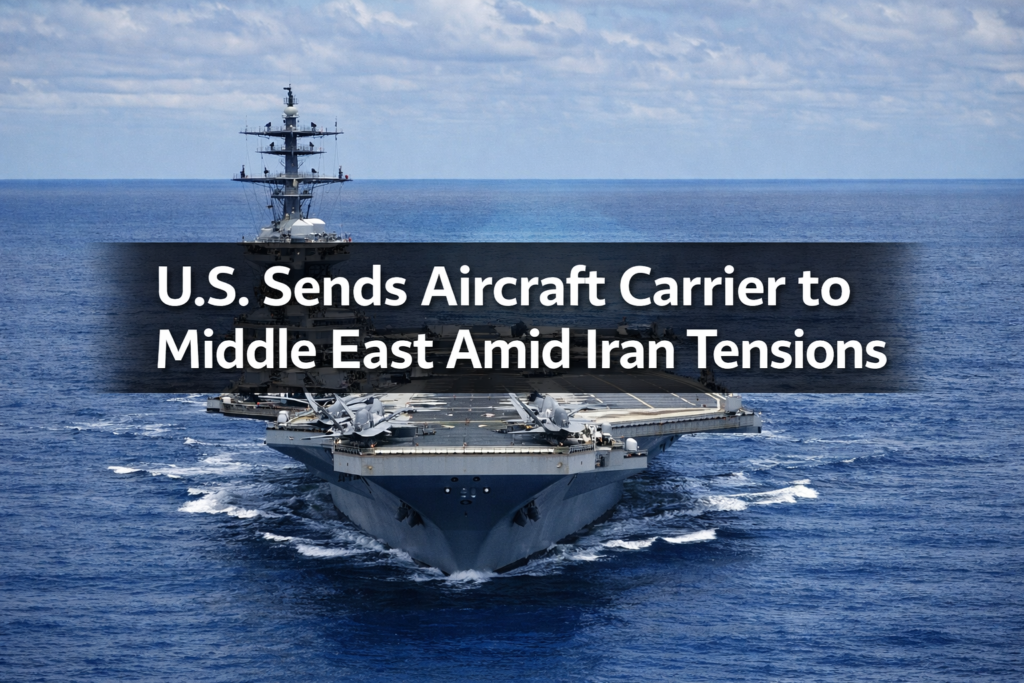
The U.S. military is enhancing its presence in the Middle East by deploying the Navy’s largest and most advanced aircraft carrier. This strategic move comes as tensions with Iran escalate, prompting U.S. officials to prepare for potential military action. The USS Gerald R. Ford will join another carrier and a fleet of warships in the region. Such deployments are indicative of a significant shift in military strategy. The decision reflects growing concerns about a possible confrontation with Tehran. This action underscores the U.S. commitment to maintaining stability in the area.
Reasons Behind the Deployment
The deployment of the aircraft carrier is primarily driven by heightened instability in the region. U.S. defense officials have indicated that the move is precautionary, yet its scale suggests a readiness for potential escalation. Aircraft carriers are crucial assets, functioning as floating air bases that can conduct operations without relying on local facilities. By positioning such a vessel in the Middle East, the U.S. enhances its rapid-response capabilities. This deployment also aims to bolster air superiority and missile defense coordination. Overall, it sends a strong deterrent message to Iran and other regional actors.
Significance of the USS Gerald R. Ford
The USS Gerald R. Ford is notable for being the Navy’s largest and most advanced aircraft carrier. Modern supercarriers like this one typically displace over 100,000 tons and can carry between 70 to 90 aircraft. They are equipped with cutting-edge radar and air-defense systems, making them formidable assets in any military operation. The carrier’s ability to support thousands of sailors and aviation personnel further enhances its operational effectiveness. Such capabilities are vital in a region marked by uncertainty and potential conflict. The deployment of this carrier signifies a serious commitment to U.S. military readiness.
Regional Implications of Increased U.S. Military Presence
The increased U.S. military presence in the Middle East has significant implications for regional dynamics. It may alter the calculations of various actors in the area, including Iran. The deployment serves as a reminder of U.S. capabilities and resolve, potentially influencing diplomatic negotiations. Additionally, it could lead to heightened tensions, as adversaries may perceive the move as a direct threat. The presence of advanced military assets can also encourage allies in the region to strengthen their own defense postures. As a result, the situation remains fluid and complex.
Potential for Military Confrontation
The possibility of military confrontation with Iran looms larger with the deployment of the aircraft carrier. U.S. officials have been closely monitoring Iran’s activities, which have raised alarms in Washington. The carrier’s presence could serve as a deterrent against aggressive actions by Tehran. However, it also raises the stakes for any potential miscalculations or misunderstandings. The situation necessitates careful management to avoid escalation into open conflict. As tensions rise, the U.S. military’s readiness will be crucial in navigating these challenges.
Historical Context of U.S. Naval Deployments
Historically, U.S. naval deployments in the Middle East have been responses to various crises. Aircraft carriers have played pivotal roles in conflicts and peacekeeping missions alike. Their ability to project power and provide rapid-response capabilities has been a cornerstone of U.S. military strategy. Each deployment is often accompanied by a complex interplay of diplomatic and military considerations. Understanding this context is essential for grasping the current situation. The ongoing developments will likely shape future U.S. engagements in the region.
Conclusion: A Strategic Move
The deployment of the Navy’s largest aircraft carrier to the Middle East represents a strategic move by the U.S. military. It highlights the ongoing tensions with Iran and the need for a robust military presence in the region. As the situation evolves, the implications of this deployment will be closely monitored by both allies and adversaries. The U.S. aims to maintain stability while preparing for any potential challenges. Ultimately, the effectiveness of this deployment will depend on the broader geopolitical landscape. The coming weeks will be critical in determining the outcomes of this strategic decision.

