
U.S.
Republican Party Faces Internal Conflict Over Iran War and America First Principles
Mar
FirstAm News | Raleigh, NC
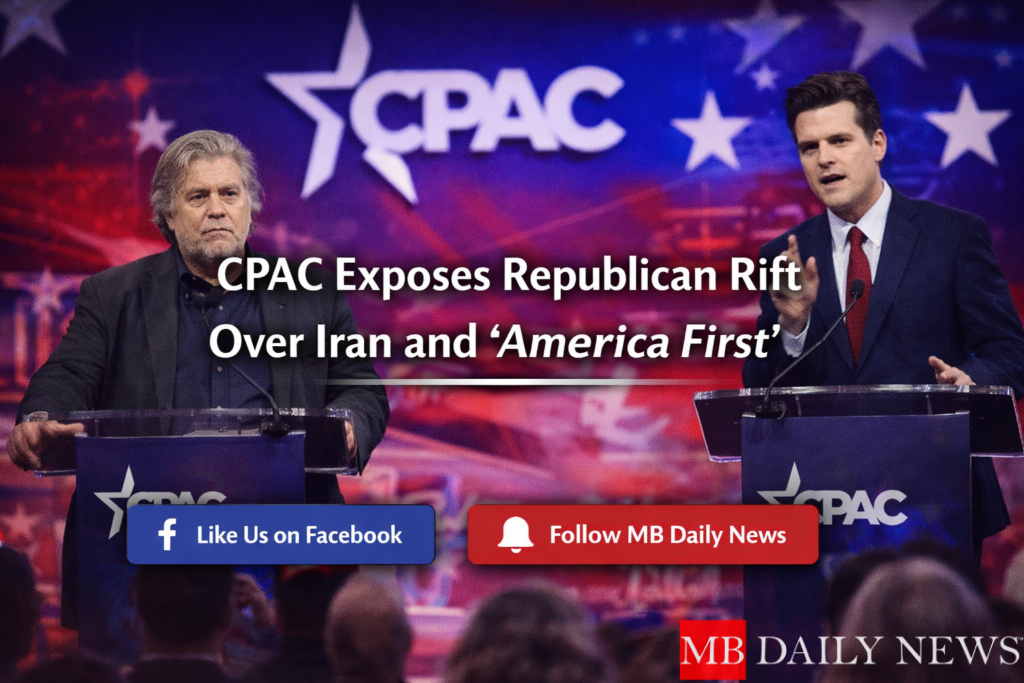
The recent Conservative Political Action Conference (CPAC) has highlighted significant internal conflict within the Republican Party regarding the Iran War and the principles of the “America First” doctrine. Once a rallying cry for conservatives, this doctrine is now under scrutiny as the situation in Iran escalates. Attendees at the conference expressed a range of opinions on U.S. involvement in the conflict, indicating a deeper ideological rift within the party. This division raises questions about the future direction of Republican foreign policy and its alignment with core conservative values.
Debate on Foreign Policy Direction
At CPAC, traditional conservatives largely supported military action in Iran, viewing it as essential for national security. However, a notable contingent of younger Republicans voiced skepticism, arguing that such involvement contradicts the original intent of the “America First” philosophy. This emerging perspective suggests a shift in priorities among the party’s base, with many advocating for a focus on domestic issues over foreign entanglements. The close results of informal polling at the event reflect this growing divide, as opinions on military engagement were split.
Concerns Over Domestic Issues
A recurring sentiment among attendees was the belief that foreign conflicts detract from pressing domestic challenges, such as the economy and job creation. Younger conservatives expressed frustration that the party seems to be moving away from its anti-interventionist roots. This shift raises concerns about whether the party can maintain its appeal to a broader electorate that prioritizes domestic stability over international military commitments. Critics argue that continued military engagement in Iran could alienate voters who feel their needs are being overlooked.
Influential Voices and Their Perspectives
Prominent figures within the conservative movement showcased the ideological split at CPAC. Some leaders defended military action as vital for maintaining global stability, while others cautioned against the potential political and economic repercussions of prolonged conflict. The contrasting views among influential conservatives underscore the complexity of the party’s stance on foreign policy. Figures such as Steve Bannon and Matt Gaetz have raised alarms about the implications of ongoing military involvement, particularly as elections approach.
Impact of Leadership Absences
The absence of key Republican leaders, including former President Donald Trump, added to the uncertainty surrounding the party’s future direction on foreign policy. Trump’s previous “America First” rhetoric has shaped the party’s identity, and his lack of presence at CPAC left a void in the discussion. This absence may have contributed to the heightened tensions and differing opinions among attendees regarding the party’s stance on the Iran War. The leadership dynamics within the party could play a crucial role in shaping its response to international conflicts moving forward.
Future Implications for the Republican Party
The divisions exposed at CPAC could have lasting implications for the Republican Party as it navigates its identity in a changing political landscape. As the debate over the Iran War continues, the party must reconcile its traditional values with the evolving perspectives of its younger members. The challenge lies in maintaining unity while addressing the diverse concerns of its base. How the party responds to these internal conflicts will likely influence its electoral success in the coming years.
Conclusion: A Party at a Crossroads
The Republican Party stands at a crossroads, facing significant internal conflict over its approach to the Iran War and the principles of the “America First” doctrine. As differing opinions emerge, the party must find a way to bridge the gap between traditional conservatives and a new generation of voters. The outcome of this ideological struggle will shape the party’s future and its ability to resonate with the American electorate. Ultimately, the resolution of these conflicts will be crucial for the party’s cohesion and electoral viability.

